
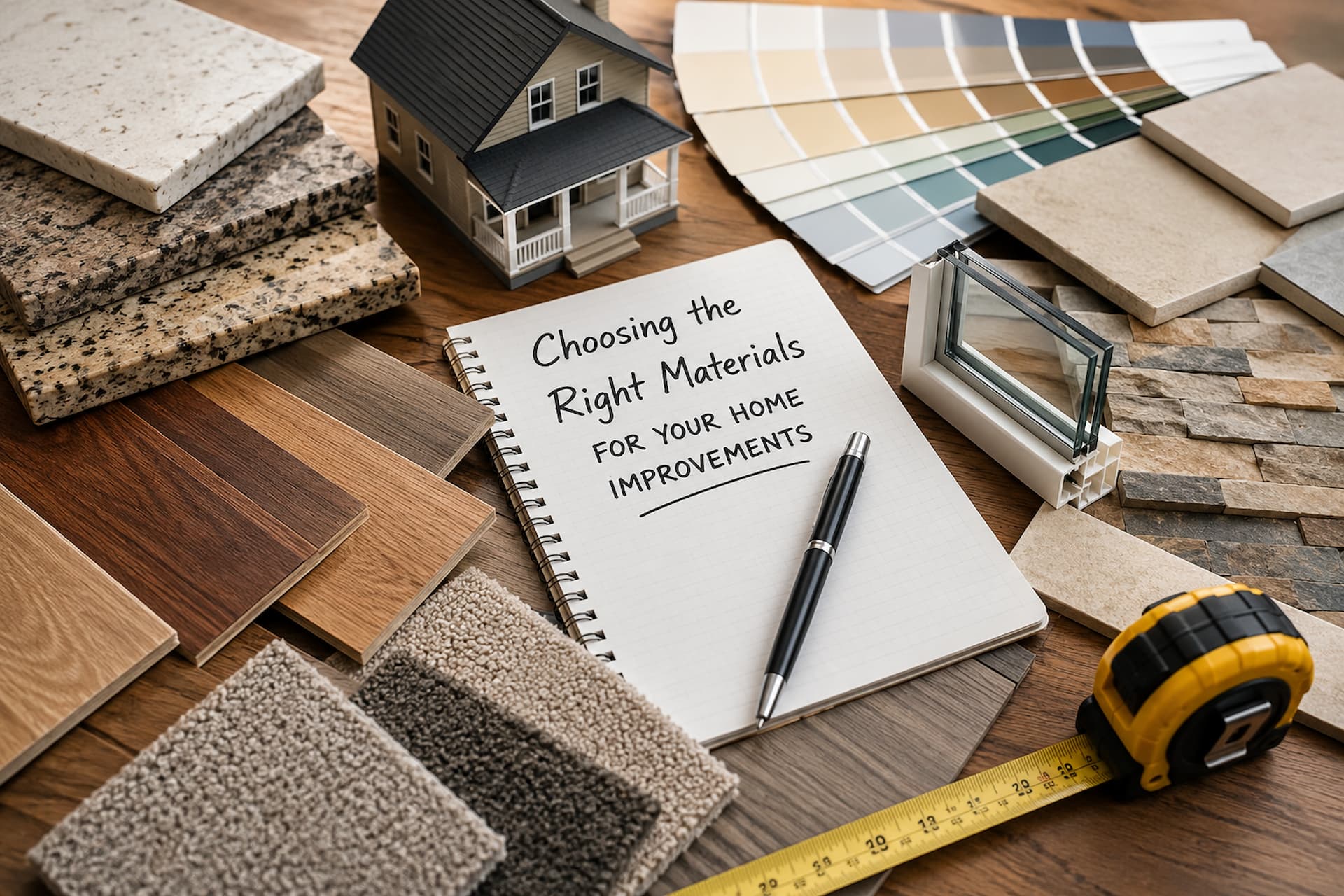
Choosing the right materials is one of the most important decisions in any home improvement project. The materials you select affect more than appearance. They influence durability, maintenance, comfort, energy efficiency, and long-term costs.
A cheaper option may look attractive at first, but frequent repairs or early replacement can make it more expensive over time. The best choice is usually the material that fits your home, lifestyle, climate, and budget.
Start With the Purpose of the Project
Before comparing flooring, countertops, roofing, or wall finishes, think about what the improvement needs to achieve.
A material that works well in a low-traffic bedroom may not perform well in a busy kitchen. Likewise, outdoor materials need to handle weather exposure, while bathroom surfaces must cope with moisture.
Ask yourself:
- How often will the area be used?
- Will the material face moisture, heat, or direct sunlight?
- Is easy maintenance important?
- How long do you expect the improvement to last?
Clear answers make the selection process much easier and help prevent expensive mistakes.
Consider Durability and Daily Wear
Durability should be a major factor when choosing home improvement materials. Floors, countertops, doors, and exterior surfaces experience different levels of daily wear.
For example, busy households may benefit from scratch-resistant flooring and easy-to-clean surfaces. Natural materials can offer excellent longevity, but some require more regular care than engineered alternatives.
The right choice depends on where the material will be used. A beautiful surface is not always practical if it cannot handle the conditions around it.
When planning major upgrades, reviewing detailed advice on home remodeling can also help you connect material choices with your overall renovation plan.
Balance Upfront Cost With Long-Term Value
Price matters, but the cheapest material is not always the best value.
Consider the complete cost of ownership, including:
- Initial purchase price
- Installation costs
- Maintenance requirements
- Repair expenses
- Expected lifespan
A higher-quality material may cost more initially but save money over time by reducing repairs and replacement. Durable flooring, for example, can be a better investment than repeatedly replacing a lower-quality option.
Current renovation planning guidance also recommends defining material choices early, since changing products during construction can increase costs and create delays.
Choose Materials That Match Your Climate
Climate has a major effect on material performance. Heat, humidity, heavy rainfall, freezing temperatures, and strong sunlight can all affect how long a material lasts.
Wood may expand or contract with changing moisture levels. Some metals can corrode in damp conditions, while certain exterior finishes may fade under intense UV exposure.
Before making a final decision, check whether the manufacturer recommends the material for your local climate. This is especially important for roofing, siding, decking, windows, and outdoor flooring.
Think About Maintenance Before You Buy
Every material requires some level of care. The key is choosing maintenance requirements that realistically fit your lifestyle.
Some homeowners enjoy maintaining natural wood or stone. Others prefer low-maintenance materials that need only regular cleaning.
Before purchasing, find out:
- Does the material need sealing?
- Are special cleaning products required?
- How easily does it stain or scratch?
- Will it need regular refinishing?
- Are repairs simple or expensive?
Choosing durable, easy-care materials can reduce the time and money spent maintaining your home.
Compare Appearance With Practical Performance
Design is important, but appearance should not be the only deciding factor.
A material may look perfect in a showroom yet perform poorly in your home. Consider lighting, room size, existing colours, and how the material will look after years of everyday use.
Samples are particularly useful. Place them in the actual room and observe them at different times of day. Natural and artificial lighting can significantly change how colours and textures appear.
For outdoor improvements, materials should also complement your home’s architecture and surrounding environment while providing the durability the space requires.
Consider Sustainable Material Options
Sustainability is becoming an increasingly important part of home improvement decisions. However, sustainable materials should still meet your practical needs.
Look at factors such as longevity, recycled content, local availability, and what happens to the material at the end of its useful life. Forbes notes that sustainable building materials should be evaluated beyond simple labels, including their wider environmental impact and long-term performance.
Be cautious of vague environmental claims. Reliable certifications and clear product information are generally more useful than marketing terms alone.
Check Quality and Installation Requirements
Even excellent materials can perform poorly when installed incorrectly.
Before buying, confirm whether professional installation is recommended. Some products require specialist tools, precise preparation, or specific structural support.
This is particularly important for heavy countertops, roofing systems, tile, electrical fixtures, and moisture-sensitive materials.
Always check product warranties and installation requirements before making a purchase. A warranty may not apply if the material is installed incorrectly.
Match Materials to Your Lifestyle
Your home should work for the people living in it.
Families with children or pets may prioritise stain resistance and durability. People planning to sell soon may focus on broadly appealing finishes. Long-term homeowners may prefer materials that offer comfort and lasting performance.
The best material is not necessarily the most expensive or fashionable one. It is the one that suits how you actually live.
Conclusion
Choosing the right materials for home improvements requires more than comparing colours and prices. Think about durability, maintenance, climate, installation, sustainability, and long-term value before making a decision.
Take time to compare options and request samples where possible. A thoughtful choice can improve your home’s appearance, performance, and comfort for many years. For more ideas and practical inspiration, explore home garden.