
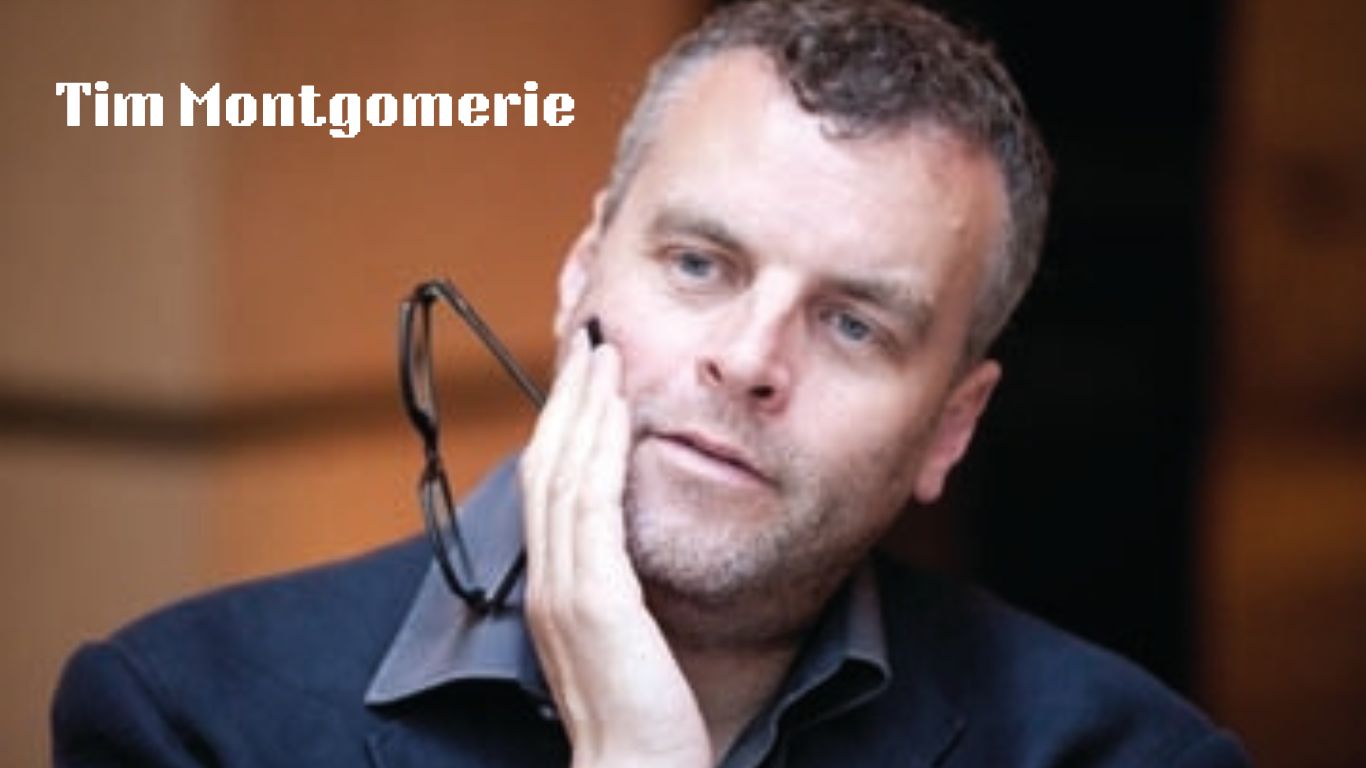
Tim Montgomerie’s name evokes a mix of admiration, curiosity, and controversy in political circles. Montgomerie has been a prominent figure in British conservatism for a long time. He is well-known for his fluctuating ideological positions, insightful political commentary, and the powerful website ConservativeHome.
But in recent years, a unique form of internet fascination has surfaced: searches for “Tim Montgomerie health problems.” Sincere concerns account for part of this attention, while incorrect information amplified by social media’s echo chamber accounts for another.
This page aims to separate fact from rumour by offering a comprehensive, fact-based biography of Tim Montgomerie that covers what is known about his health, including his open disclosure of mental health issues—without speculation or exaggeration.
Early Life and Experience
On July 24, 1970, Tim Montgomerie was born in Barnstaple, Devon, into a military family. His upbringing was marked by the mobility and discipline typical of Army households, which would later influence his sense of civic duty and political identification.
He attended nearby schools before going to the University of Exeter to study geography and economics. At Exeter, he began to base his worldview on social responsibility, Christianity, and conservative principles. Friends and scholars described him as bright, articulate, and enthusiastic in both political theory and moral philosophy.
Early Engagement in Politics
Tim Montgomerie’s involvement with conservative student movements during his time in college sparked his interest in politics. In the early 1990s, he co-founded the Conservative Christian Fellowship (CCF), motivated by his Christian beliefs and principles. The organization was founded to support a compassionate attitude to public service and to urge the incorporation of Christian values into Conservative Party policies.
Montgomerie’s ability to unite traditional conservative beliefs with a greater emphasis on social responsibility was established by this early effort. In order to better the lives of vulnerable people, he has continuously pushed for policies that combine budgetary prudence with workable solutions throughout his career.
Creating ConservativeHome: Revolutionising Online Conservative Politics
Montgomerie established ConservativeHome, an independent political website, in 2005. It soon rose to prominence as one of the most significant conservative platforms in the UK. The website gave party members, activists, and supporters a forum to freely exchange views outside of official Conservative channels during a period when political blogging was still in its infancy.
ConservativeHome gained recognition for its in-depth research, opinion pieces, and polling, which frequently influenced Westminster discussions. Montgomerie never hesitated to question party leadership when he thought reform was necessary, even if he supported conservative ideals. He gained respect from people of all political persuasions for his impartial stance.
Long before social media transformed political communication, he was instrumental in modernising the Conservative Party’s internet participation by increasing exposure for grassroots members and promoting candid discussion.
The Social Justice Center
Montgomerie co-founded the Centre for Social Justice (CSJ) with Iain Duncan Smith in addition to working in political journalism. The think tank was established to tackle long-term socioeconomic issues such welfare reform, poverty, addiction, family dissolution, and educational disadvantage.
His membership in the CSJ demonstrated his conviction that conservative politics ought to go beyond economic matters and actively work to improve communities and families. This focus on fusing real social reform with individual accountability became a defining feature of his public career.
Political commentary and journalism
Montgomerie entered national media as his stature increased, and in 2013 he joined The Times as Comment Editor. He published a great deal about public policy, British politics, and the future of conservatism in this capacity.
He has contributed to a number of prestigious publications over the years and has established himself as a well-known figure on television, making appearances on BBC News, GB News, and Sky News. Brexit, social policy, political leadership, and the evolving ideals of contemporary Britain are among the topics he frequently discusses in his commentary.
Montgomerie has established himself as one of Britain’s most esteemed conservative pundits by fusing critical thinking with a readiness to challenge his own political stance.
Talking Honestly About Mental Health
Tim Montgomerie has gained recognition for his candid discussions about mental health outside of politics and journalism. His willingness to talk about personal struggles has given his public presence a more human touch and sparked more extensive discussions about welfare in politics.
He has shown that prominent personalities can lessen the stigma associated with mental health while still participating in public life by sharing his experiences and emphasising the value of resiliency, compassion, and seeking treatment.
Talking Honestly About Mental Health
Tim Montgomerie openly discussed his experience with depression and how extended seclusion impacted his sense of purpose after the COVID-19 lockdowns. He made the decision to be candid about the psychological effects of the epidemic at a time when many prominent personalities shied away from talking about their personal hardships.
Particularly among males in politics and the media, where vulnerability is sometimes disregarded or confused with weakness, his candour helped promote more candid discussions about mental health.
His remarks received mostly favourable feedback. Montgomerie emphasised that admitting mental health issues is not a sign of personal failure but rather of honesty and self-awareness. Many of the individuals who had followed his political activities but were able to relate to his personal struggles found resonance in his message.
By discussing depression in public, he also contributed to raising awareness of a problem that impacted millions of people throughout the pandemic and reminding audiences that mental health is just as important as physical health.
Distinguishing Fact from Rumour
Concerns regarding Tim Montgomerie’s health have been raised in recent years by social media conversations and internet searches. There is no solid proof to back up the rumours that he might be suffering from a significant medical condition.
According to his own public remarks, the only health concern he has publicly addressed is his mental health both during and after the pandemic. He has not disclosed any significant medical condition, disability, or long-term physical sickness.
Misinformation has propagated due to a number of factors:
- People often make assumptions about public figures’ health based only on how they look.
- Unverified rumours are frequently spread without proof on websites and social media.
Further confusion is caused by some people confusing American former sprinter Tim Montgomery with British political analyst Tim Montgomerie.
Sometimes, conversations regarding mental health are mistakenly seen as proof of more serious physical sickness.
The evidence that is now available leads to a clear conclusion: Montgomerie has talked candidly about anxiety and sadness, but there is no concrete proof that he has a severe physical illness.
Handling Stress in Public Life
Throughout his career, Montgomerie has worked in politics, journalism, and public commentary—all fields with rigorous schedules and ongoing public scrutiny. Anyone working in public life might suffer greatly from the demands of the contemporary news cycle, political discourse, and internet criticism.
He has realised the value of taking time to heal and preserving emotional health rather than dismissing those pressures. He has discussed the importance of relaxation, faith, and supportive networks in assisting individuals in overcoming challenging times.
According to his observations, resilience is about identifying challenges and reacting to them in positive, healthy ways rather than trying to avoid them.
Realignment of Politics
Tim Montgomerie garnered a lot of attention in 2024 when he declared his support for Reform UK and left the Conservative Party. Many observers were taken aback by the move, given his longstanding affiliation with Conservative politics.
He clarified that the decision was made on the basis of political convictions, claiming that the Conservative Party had strayed from ideals he considered essential, such as effective government, cultural regeneration, and national identity. Reform UK, in his opinion, provided a more robust basis for those goals.
Like many high-profile political shifts, conjecture soon ensued. Some internet debates tried to connect his choice to health issues. Nevertheless, those assertions are unsupported by any proof. Rather than being linked to health concerns, his political realignment was portrayed as an ideological choice.
Belief and Individual Principles
Montgomerie’s perspective has always been heavily influenced by his faith. He has frequently written and spoken about the importance of forgiveness, humility, compassion, and personal accountability in both public life and leadership as a devout Christian.
He has admitted that his faith and close community have given him stability during trying times, including his issues with mental health, even though he usually keeps his private life out of the public eye.
His approach to politics and public discourse has been shaped by these personal beliefs, which have maintained a constant influence throughout his career.
Public Image
Tim Montgomerie has received both acclaim and criticism over his career. His supporters appreciate his critical analysis, independent thinking, and readiness to question political conventions. His political views, according to his detractors, have changed in ways that occasionally startle devoted supporters.
He continues to be a well-known and significant voice in British political discourse despite conflicting viewpoints.
His candour about mental health has also broadened his public legacy outside of politics, proving that self-reflection, honesty, and vulnerability are all components of great leadership.
Maintaining Privacy
It makes sense that the public would be interested in well-known individuals, but health-related conversations should always be based on factual data rather than conjecture.
The facts of Tim Montgomerie’s case are evident:
In the wake of the COVID-19 outbreak, he has openly talked about dealing with depression and other mental health issues.
- He hasn’t disclosed any severe or persistent medical conditions.
- There is no reliable evidence to back up claims that say differently.
- To ensure accurate and equitable public discourse, it is crucial to distinguish verified facts from internet conjecture.
- As readers and citizens, it is our duty to approach these topics with empathy and tolerance.
Current Initiatives and Opportunities
As of 2025, Tim Montgomerie continues to be active in politics through criticism, interviews, and podcasts. He is still a distinctive voice in British media, not afraid to challenge conventional thought on both the left and the right.
People of all ideologies have come to appreciate him because of his intellectual curiosity and moral earnestness. Whether it’s culture, policy, or personal belief, he tackles every topic with the nuance of someone who has encountered both triumph and adversity.
In his most recent appearances, Montgomerie has emphasised the importance of integrity, humility, and renewal in political life—a message that resonates in an era of gloom.
If anything, his willingness to discuss mental health candidly has boosted his credibility and reminded audiences that sincerity is still a crucial and rare trait in public discourse.
The Greater Importance of the Story
The tale of Tim Montgomerie serves as an example of a more general truth about modern culture. Public figures are often reduced to headlines, memes, and gossip, yet behind every name is a person who faces the same problems as everyone else.
Montgomerie’s admittance of his mental health journey lifted him above the level of political commentator and made him a beacon of honesty and resilience in a world often marked by pretence.
His story encourages other professionals, especially those in high-stress occupations, to resist the stigma attached to mental illness and to take their health seriously.
To sum up
The public record indicates that Tim Montgomerie’s health problems are connected to his mental health problems during the pandemic, which he has courageously discussed. Beyond that, there is no verified evidence of a serious physical illness or ongoing medical issue.
He is a morally upright writer, thinker, and devoted guy who is still growing both in public and personally. To define him based only on gossip would be to ignore the far more interesting story.
His life story is one of tenacity rather than weakness; it is the story of a man who earned prominence through conviction, honestly faced personal disappointments, and used his position to foster serious discourse about politics, culture, and the human condition.
Montgomerie’s example serves as a reminder that a public figure’s most powerful tools are still honesty, integrity, and vulnerability—despite the proliferation of misleading information in the digital age.