
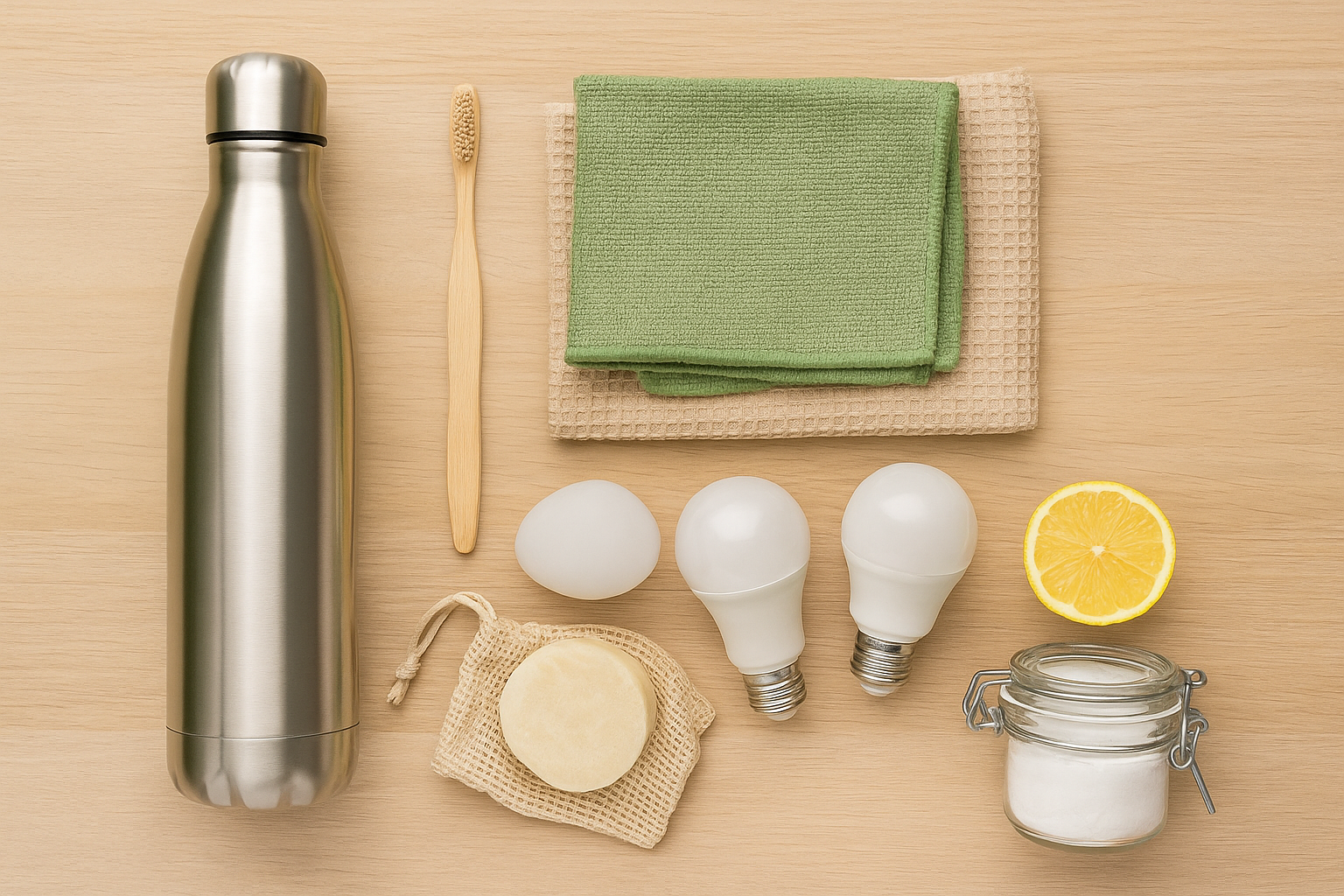
Sustainability doesn’t start with global policies — it begins at home. Every time you refill a bottle, reuse a bag, or compost food waste, you make a quiet yet powerful contribution to the planet. Adopting eco-friendly swaps doesn’t just reduce waste; it reshapes how we live, consume, and care for our surroundings. Here are ten practical and impactful changes to help you build a truly sustainable home.
Introduction: Sustainability Starts at Home
Our homes are at the center of our environmental footprint. The energy we consume, the waste we produce, and the materials we use all leave lasting marks on the planet. Fortunately, modern sustainability is not about sacrifice — it’s about smarter living.
Small, practical changes such as replacing single-use plastics, upgrading lighting, or composting food waste can reduce your carbon footprint significantly. The following ten eco-friendly swaps are easy to adopt, cost-effective, and immensely rewarding — proving that going green is as good for your wallet as it is for the world.
1. Replace Plastic Bottles with Reusable Ones
Single-use plastic bottles are among the most harmful pollutants in the world, with millions produced daily and only a fraction recycled. They litter oceans, harm marine life, and take centuries to decompose. Switching to reusable bottles is one of the easiest and most effective environmental actions you can take. A stainless-steel or glass bottle is durable, hygienic, and reduces your reliance on disposable plastics — one refill at a time.
Why It Matters
- Over 1 million plastic bottles are purchased every minute worldwide.
- They take 400–500 years to break down.
Sustainable Swap
- Use insulated stainless steel or glass bottles.
- Carry your bottle everywhere — from the gym to the office.
Benefits
- Eliminates hundreds of plastic bottles per person annually.
- Saves money and reduces plastic pollution.
2. Replace Paper Towels with Reusable Cloths
Paper towels seem harmless but come at a steep ecological cost. Their production consumes vast amounts of trees, energy, and water, while generating unnecessary waste. A simple swap to reusable cloths — made of bamboo, microfiber, or cotton — drastically cuts down on paper use. They’re washable, long-lasting, and perfect for cleaning surfaces or drying hands without adding to deforestation or landfill waste.
Why It Matters
- The UK alone uses millions of rolls yearly, most ending up unrecycled.
- Deforestation and chemical bleaching increase carbon emissions.
Sustainable Swap
- Keep bamboo or cotton cloths in every room.
- Wash weekly with eco-friendly detergent.
Benefits
- Saves money long-term.
- Reduces paper waste and preserves trees.
3. Upgrade to LED Lighting
Lighting is an invisible energy drain in most homes. Traditional bulbs consume unnecessary power and have short lifespans. LEDs (Light Emitting Diodes) are a revolutionary alternative that use up to 85% less energy and last decades longer. They illuminate your home with the same brightness, save you money, and significantly reduce your carbon footprint — all while creating a modern, comfortable atmosphere.
Why It Matters
- Lighting accounts for about 15% of a home’s total energy consumption.
- Incandescent bulbs waste 90% of energy as heat.
Sustainable Swap
- Replace all bulbs with LED or CFL options.
- Pair with smart dimmers and motion sensors.
Benefits
- Cuts electricity costs by up to 80%.
- Lowers CO₂ emissions and heat output.
4. Choose Natural Cleaning Products
Your cleaning routine may be harming more than just dirt. Many commercial products contain chemicals that release toxins into your home and waterways. Natural alternatives — made from vinegar, lemon, and baking soda — are equally effective and far safer. They protect your health, reduce water pollution, and keep indoor air clean. Eco-friendly cleaning is proof that you can maintain hygiene without sacrificing the environment.
Why It Matters
- Harsh detergents contribute to indoor air pollution.
- Many ingredients are non-biodegradable and toxic to aquatic life.
Sustainable Swap
- Use eco-certified cleaners or make DIY mixtures.
- Refill containers instead of buying new bottles.
Benefits
- Safer for children and pets.
- Cost-effective and planet-friendly.
5. Trade Plastic Toothbrushes for Bamboo
We throw away billions of plastic toothbrushes every year — tiny objects that never truly disappear. A bamboo toothbrush offers the same cleaning efficiency while being biodegradable and renewable. The bamboo handle can be composted, and the bristles recycled. It’s a small change with an outsized impact, keeping plastic out of oceans and landfills while promoting a greener start and end to every day.
Why It Matters
- Plastic toothbrushes take 400+ years to decompose.
- Billions are discarded annually, adding to microplastic waste.
Sustainable Swap
- Choose bamboo brushes with recyclable bristles.
- Compost the handle after use.
Benefits
- Fully biodegradable, non-toxic, and renewable.
- Reduces oceanic plastic waste.
6. Use Energy-Efficient Appliances
Old appliances are silent energy thieves. Fridges, washing machines, and dishwashers built decades ago consume far more electricity and water than modern versions. Upgrading to energy-efficient appliances not only reduces your bills but also minimizes emissions. Look for appliances with energy ratings like A+++ or Energy Star certification — they’re designed to deliver top performance while consuming minimal resources.
Why It Matters
- Outdated appliances increase carbon emissions.
- Household energy use contributes heavily to climate change.
Sustainable Swap
- Invest in high-efficiency models.
- Unplug devices when not in use.
Benefits
- Saves electricity and water.
- Cuts energy bills significantly.
7. Choose Sustainable Furniture and Décor
The furniture industry is a hidden environmental culprit. Fast furniture, like fast fashion, encourages frequent disposal and cheap production. Choosing sustainable furniture made from reclaimed or FSC-certified wood, recycled metal, or bamboo helps preserve forests and reduces waste. Upcycling old pieces also adds character to your home while supporting eco-conscious craftsmanship and reducing landfill impact.
Why It Matters
- Furniture production drives deforestation and high carbon output.
- Synthetic materials release harmful chemicals.
Sustainable Swap
- Buy recycled or refurbished furniture.
- Support local artisans and vintage markets.
Benefits
- Reduces waste and supports local sustainability.
- Long-lasting and uniquely designed.
8. Replace Plastic Bags with Fabric or Jute
Plastic bags are among the most common forms of global pollution. They clog rivers, harm wildlife, and take centuries to break down. Reusable fabric, cotton, or jute bags are durable, washable, and biodegradable. Keeping one handy ensures you never need to rely on single-use plastic again — a small habit that collectively saves millions of tones of plastic waste every year.
Why It Matters
- Plastic bags cause severe harm to marine ecosystems.
- Over 5 trillion are used globally each year.
Sustainable Swap
- Carry reusable bags when shopping.
- Wash occasionally to maintain hygiene.
Benefits
- One reusable bag replaces hundreds of single-use ones.
- Sturdy, long-lasting, and eco-friendly.
9. Start Composting Kitchen Waste
Composting turns kitchen scraps into nutrient-rich soil while reducing methane emissions from landfills. Fruit peels, vegetable remains, coffee grounds, and eggshells can all be composted at home using a bin or outdoor heap. This simple, natural process closes the loop on food waste and benefits both the environment and your garden — turning what once was rubbish into fertile life.
Why It Matters
- Food waste is a top contributor to greenhouse gases.
- Landfill decomposition releases methane.
Sustainable Swap
- Start a compost bin or worm composter.
- Mix wet and dry waste for effective breakdown.
Benefits
- Reduces landfill waste by up to 30%.
- Produces organic fertilizer for plants.
10. Improve Insulation and Use Smart Thermostats
Heating and cooling account for nearly half of home energy use. Poor insulation forces systems to work harder, wasting money and fuel. Upgrading insulation and using smart thermostats creates a comfortable, energy-efficient environment. These thermostats learn your habits, adjusting temperatures automatically and reducing unnecessary energy use — a modern blend of comfort, convenience, and environmental responsibility.
Why It Matters
- Heat loss increases carbon emissions and energy bills.
- Poor insulation wastes up to 25% of household energy.
Sustainable Swap
- Install smart thermostats and wall insulation.
- Seal gaps around windows and doors.
Benefits
- Cuts heating costs by up to 30%.
- Enhances comfort and energy efficiency.
Bonus Tips for a Greener Home
- Buy local and seasonal produce.
- Recycle and compost wherever possible.
- Use solar power if available.
- Educate your family about eco-living.
- Conserve water with low-flow taps and showers.
Did You Know?
- Bamboo can grow up to 1 meter a day, making it the world’s most renewable plant.
- The UK sends over 22 million tonnes of household waste to landfill each year.
- Using LEDs nationwide could save £1 billion annually in energy costs.
- Composting reduces methane 25x more effectively than landfill storage.
Frequently Asked Questions
1. Are eco-friendly swaps really worth the effort?
Absolutely. Every sustainable swap may seem small on its own, but together they create a meaningful environmental impact. When millions of households choose reusable bottles, LED lights, or composting systems, the reduction in waste and emissions becomes enormous. These everyday changes lower national energy demand, protect ecosystems, and set a global example of responsible consumption — proving that collective consistency, not perfection, drives real progress.
2. How much can I save by switching to green products?
Switching to eco-friendly alternatives is not only better for the planet but also for your wallet. Households that use LED bulbs, efficient appliances, and natural cleaning products can save between £200 and £400 annually. Over time, lower energy bills, reduced water use, and fewer disposable purchases add up to substantial savings. Sustainability blends environmental care with financial sense — rewarding those who think long-term.
3. Do eco-products perform as well as regular ones?
Yes, modern eco-friendly products are designed for high performance and durability. Innovations in sustainable materials and manufacturing ensure these items work just as effectively, if not better, than their conventional counterparts. Whether it’s bamboo toothbrushes, LED lights, or eco detergents, you’ll experience similar results with added benefits — fewer chemicals, lower emissions, and less waste. Today, eco-living combines efficiency, health, and environmental responsibility effortlessly.
4. What’s the easiest eco swap to start with?
Start small and focus on habits that fit naturally into your daily life. Switching to a reusable bottle, carrying a fabric shopping bag, or replacing old bulbs with LEDs are easy yet impactful steps. These swaps require no major effort but deliver immediate results in reduced waste and lower bills. Once these become routine, you can gradually incorporate larger sustainable practices like composting or home insulation upgrades.
5. Can sustainability work for renters?
Definitely, sustainable living is not limited to homeowners — renters can make meaningful changes too. You can choose energy-efficient bulbs, eco cleaning products, and reusable household essentials without altering property structures. Small additions like indoor plants, low-flow showerheads, and smart power strips further improve efficiency. Sustainability thrives on creativity and commitment, proving that you don’t need ownership to live responsibly and contribute to a greener planet.
Conclusion: Redefining Comfort through Conscious Living
Living sustainably is not about deprivation; it’s about intention. By making small, mindful swaps, you can protect natural resources, support ethical industries, and create a healthier home. Each action — whether switching a bulb or composting leftovers — is part of a global solution.
Sustainability is more than an environmental trend; it’s a legacy. The future of our planet begins with everyday choices, and your home can be the starting point for that change.