
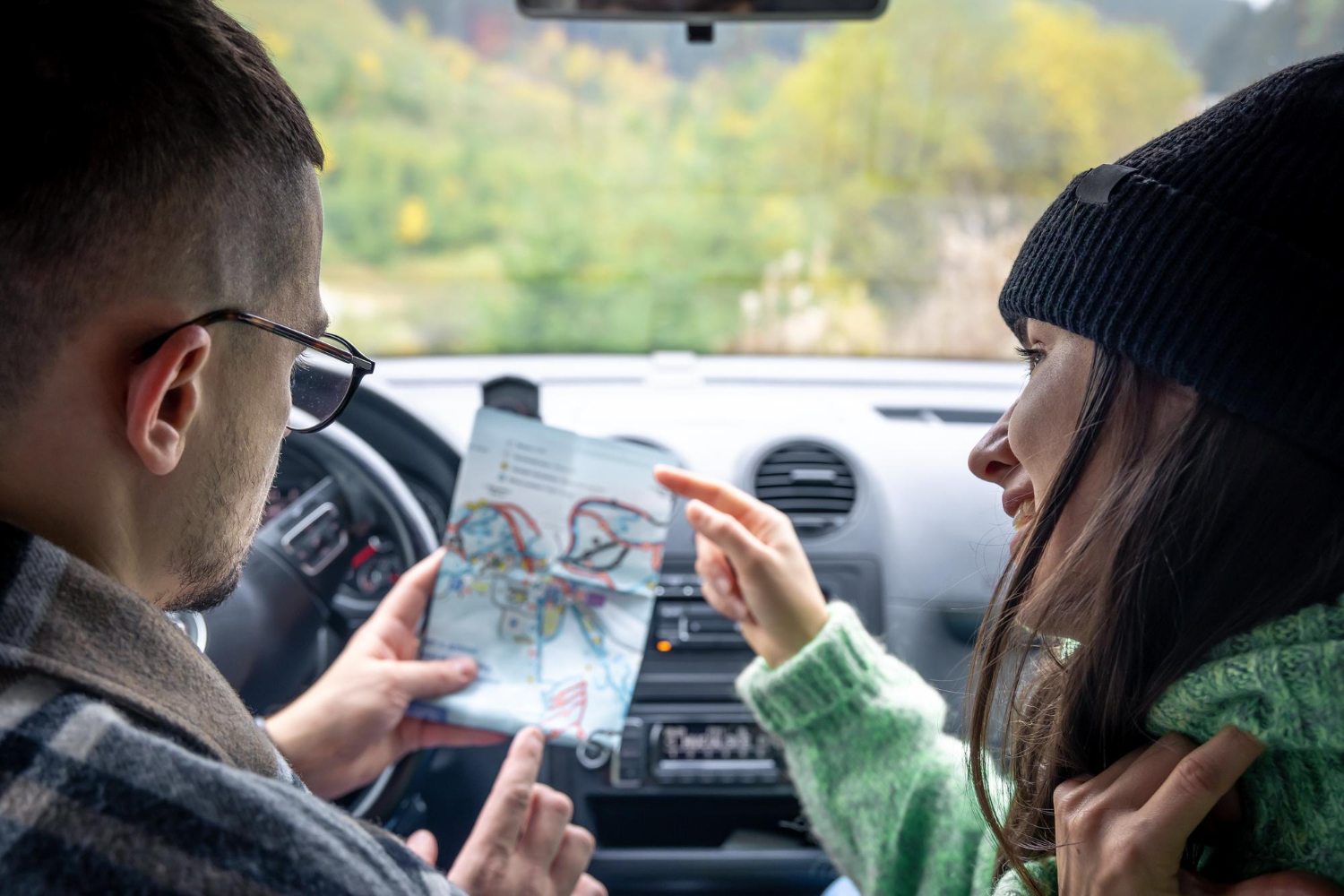
The term “bumetro” has surfaced online in conversations about connected transit and smarter city mobility. The core concept that is frequently associated with it is straightforward: instead of launching separate apps for buses, trains, bicycles, and shared rides, travellers might view various modes of transportation collectively. This falls within the broader concept of smart multimodal mobility, which is defined by institutions like the European Commission as utilising digital technology to improve the efficiency, sustainability, and connectivity of travel.
However, there is something crucial to comprehend. At the moment, Bumetro lacks the distinct public identification of well-known transit systems like London Underground, Uber, Google Maps, and Citymapper. There is still little and even inconsistent information under the name. As a result, rather than assuming that every function listed online is part of a single, officially recognised worldwide service, it is safer to view Bumetro as an emergent smart-mobility concept or search word.
What might Bumetro mean, then? How may this kind of technology facilitate city travel? And why are people looking for it all of a sudden? This is a basic guide.
Bumetro: What Is It?
On the internet, Bumetro is frequently referred to be a clever method of urban mobility.
Let’s say you have to go across a big metropolis from your house to a workplace. It is not possible to walk the whole distance. The nearest rail station is some km distant, and there isn’t a direct bus.
Thus, your travel may resemble this:
Take a bus to the train station, walk five minutes to a bus stop, ride the train into the city center, and then walk ten more minutes.
Usually, to keep everything organised, you may require many apps or websites.
The goal of a Bumetro-style system is to centralise the entire trip.
The method considers your entire trip rather than just individual vehicle.
Travelling in cities might be considerably simpler with that tiny adjustment.
Why Is Bumetro Growing in Interest as a Search Term?
Cities are growing larger, and people’s modes of transportation are getting more intricate.
Many commuters used to just use one bus route or drive their cars. A city dweller can have a lot more options these days.
Buses, trains, trams, shared bicycles, electric scooters, taxis, ridesharing vehicles, and walking paths are all available.
It sounds great to have more options.
However, having more options can sometimes lead to confusion.
What is the fastest route?
Which is the least expensive?
Is the train going to arrive on schedule?
Can you ride a bike for a portion of the trip?
Is it preferable to take the bus rather than hailing a cab?
A smart mobility platform seeks to provide prompt answers to these queries.
For this reason, concepts related to Bumetro may seem appealing.
Bumetro and the Mobility as a Service Concept
It is helpful to comprehend something known as Mobility as a Service, or MaaS, in order to better understand Bumetro.
Although the term sounds difficult, the concept is quite simple.
Consider Netflix.
Thousands of films and TV series are available on Netflix. Every movie doesn’t require a different machine.
Mobility as a Service aims to make transit feel like that.
MaaS attempts to digitally connect a bus, bicycle, taxi, and train rather than treating them as entirely distinct systems.
A traveller enters both their current location and their desired destination.
After that, the platform can recommend potential pairings.
For instance:
Home → Bicycle → Train > Train → Walk → Office.
Rather than attempting to construct the journey piece by piece, the traveler views the entire journey.
How Would Bumetro Operate?
Typically, a smart urban mobility system starts with two types of data.
You’re where?
Where would you like to go?
The system can look at the available transport choices after obtaining these facts.
It might find that using a direct cab takes 35 minutes and is far more expensive than using public transportation.
A different path might take five minutes to walk, ten minutes by bus, and twenty minutes by train.
Cycling could be a third option.
The options can then be compared by the user.
Compared to examining each transport provider individually, this is significantly simpler.
Multimodal Route Scheduling
Multimodal route planning is one of Bumetro’s most practical concepts.
“Multi” denotes a large number.
“Modal” refers to many modes of transportation.
Thus, employing multiple modes of transportation when travelling is simply referred to as multimodal travel.
You might already do this without giving it much thought.
Maybe you take a bus after walking to a station every morning to catch a train.
That journey is multimodal.
By arranging each step in the proper sequence, technology can greatly streamline this procedure.
Travel Information in Real Time
Only when the information supporting a travel plan is correct can it be useful.
Let’s say an app informs you that your bus is scheduled to arrive at 8:20 a.m.
At 8:15, you arrive at the stop.
Then you learn that there is a twenty-five-minute delay in the bus.
Your meticulously organised trip is suddenly pointless.
This explains why real-time information has grown to be such a crucial component of contemporary transportation technology.
Transport networks’ data can be used by a smart system to display the most recent arrival and departure times.
The journey may also alter when something changes.
The station may recommend a different route rather than waiting for a delayed bus.
Time can be saved, and frustration can be decreased.
Comparing Travel Times
Being the fastest does not always equate to being the best.
Consider two paths.
Route A requires a costly taxi and takes thirty minutes.
Walking and using the train, Route B takes 38 minutes.
Route A might be selected by someone in a hurry to go to the airport.
Route B might be preferred by a student who commutes to university every morning.
Therefore, rather of only presenting one “best” route, a helpful mobility platform should offer options.
Priorities vary from one to person.
These distinctions might be simpler to comprehend using bumetro-style route planning.
Is Bumetro Able to Display Travel Expenses?
One of the most important considerations when choosing a mode of transportation is cost.
Although costly, a taxi may be practical.
A bus might be much less expensive.
For a quick ride, a shared bicycle could be even more affordable.
Travellers may be able to make better choices if they see estimated costs next to each route.
Imagine witnessing:
24 minutes is the fastest route.
39 minutes is the cheapest route.
31 minutes is the shortest walking path.
All of a sudden, making decisions is much simpler.
However, it is important to distinguish between guarantyd ultimate fares and anticipated rates. Local regulations, zones, demand, and specific operators can all affect transportation costs.
Greener Travel and Bumetro
The ecology is impacted by transportation.
Millions of individual motor trips can add to air pollution, fuel consumption, and traffic.
Many people can be transported by public transport with fewer cars.
For short trips, walking and cycling can be even more environmentally friendly.
Therefore, a smart mobility system might persuade travellers to make more environmentally friendly decisions.
Consider two possible routes, for instance.
One entails a 12-kilometer solo drive.
The second entails walking to a train station and boarding the vehicle.
Some users might select the second choice if the platform makes the environmental difference very evident.
Not everyone is going to change.
But in the end, thousands of little choices can have a significant impact.
The Significance of Public Transportation
Buses and trains cannot be replaced by technology.
This is a crucial point.
If the bus never shows up, a lovely app won’t do much good.
A railway line cannot be fixed by a smart algorithm.
Furthermore, a route planner cannot suddenly establish transport services in a place where none now exist.
When smart mobility is supported by a robust real-world transportation network, it performs best.
Consider the app to be the brain that helps plan the trip.
The actual work is still being done by the roads, stations, buses, and trains.
Both are required.
Bumetro for Everyday Travellers
The folks who stand to gain the most from connected transport tools may be regular commuters.
A person who commutes to work five days a week is already familiar with their typical route.
However, issues do arise.
A train is cancelled.
The major road is blocked by traffic.
A station closes for a while.
A bus is running late.
Alternatives could be promptly suggested by a clever platform.
The commuter might be able to view alternative route right away rather of having to spend ten minutes looking through several websites.
When someone is already running late, that convenience becomes even more valuable.
Students’ Bumetro
Students frequently require reasonably priced transport.
A lot of people don’t have cars.
They might rely on walking, biking, buses, and trains.
For this reason, cost is crucial.
A system that evaluates multiple routes could assist students in striking a balance between cost and travel time.
For instance, a student may find that they may take public transport rather than paying for a rideshare if they leave their house ten minutes early.
You can save a little money by doing that once.
You could save a lot more money if you did it every school day.
Bumetro for Visitors
When you first arrived in a new city, have you ever looked at a transport map and not understood a thing?
This is a persistent issue for tourists.
They might not know where to change trains, what ticket they need, or whether it would be faster to walk.
Language can lead to further issues.
An unknown city can be considerably easier to navigate with a clear digital route planner.
The visitor just walks into a hotel or other establishment.
The travel is explained step-by-step by the system.
This lessens the anxiety associated with travelling to a new location.
Issues with the First and Last Mile
The first-mile and last-mile problem is one of the most significant issues with public transport.
Imagine being able to get to work almost immediately by train.
Fantastic.
However, your house is two km away from the rail station.
You might decide not to use the train at all after the initial portion of the trip.
Walking routes, buses, scooters, and shared bicycles can all aid in bridging the distance.
At the other end of the trip, the identical issue arises.
The ability of a smart transportation system to think beyond the actual train travel makes it beneficial.
It examines the entire door-to-door process.
Are Bikes and Scooters Included in Bumetro?
Buses and railroads are no longer the only modes of urban transportation available today.
In many cities, sharing bicycles has become the norm.
Some places have electric scooters.
Other choices are offered by ridesharing and car-sharing businesses.
Journey flexibility could be greatly increased by integrating these services with conventional public transport.
Instead of waiting fifteen minutes for a bus, a traveller might bike one kilometre.
After the last train, someone else might take a quick shared trip.
Flexibility is the key concept.
The Importance of Accessibility
Every traveller has different physical requirements.
For one person, a path could seem ideal, but for another, it might not be feasible.
Step-free stations might be necessary for a wheelchair user.
An elderly traveller may want to walk less.
Elevators may be desired by parents who use pushchairs.
A person with a lot of bags could avoid making multiple transfers.
These distinctions should be taken into account by good mobility technologies.
Finding the quickest path alone is insufficient.
It is far more beneficial to determine the best practicable path for each individual traveller.
User Data and Privacy
Information may be needed for smart transport platforms.
Your location may be required by the app.
It might recall past locations.
Financial information may also be involved if payments are included.
Because of this, privacy is crucial.
Users should be aware of what data a service gathers, why it gathers it, and who has access to it.
It seems sense to examine the official operator and privacy policy of a mobility platform before providing sensitive information.
Digital safety shouldn’t be sacrificed for convenience.
Is Bumetro a recognised transport network?
Here’s where readers need to exercise caution.
Recent web content uses the name Bumetro, but there isn’t yet the same readily recognisable public documentation that comes with a significant national transport authority or a well-known mobility platform on a global scale.
This does not imply that everything that has been stated about Bumetro is untrue.
It just means that readers should keep the concept and verified services apart.
Multimodal route planning, for instance, is a practical and well-established technology.
Information about public transport is available in real time.
There is such a thing as smart ticketing.
There is such a thing as mobility-as-a-service technology.
However, it is another matter entirely whether all of the features listed on the internet are explicitly accessible through a service called Bumetro.
Prior to opening an account, making a payment, or disclosing personal information, always seek official confirmation.
Bumetro and “VU Meter” Are Not Always the Same
This keyword may become confused for another reason.
Similar spelling has been used in various electronics talks when discussing VU meters.
An audio gadget or display that indicates signal strength is called a VU meter.
On outdated stereo equipment, you might have seen one. When the volume of the music changes, a needle moves.
Buses and metro routes are unrelated to that.
Consequently, context is important.
The author may be referring to “VU meter” while discussing amplifiers, LEDs, speakers, or Arduino projects.
The term “smart mobility” is most likely being used when discussing buses, trains, and city travel.
What Constitutes an Effective Smart Mobility Platform?
More is required for a practical mobility platform than just a beautiful design.
The data needs to be correct.
Routes must to be simple to comprehend.
Live updates ought to come in fast.
Prices ought to be mentioned in detail.
Information about accessibility ought to be accessible.
Privacy safeguards must to be simple to locate.
Above all, the service need dependable relationships with real transportation providers.
Even the most intelligent-looking travel app becomes annoying in the absence of reliable data.
Advantages of the Bumetro Idea
The simplicity of the Bumetro concept is its greatest asset.
Behind the scenes, city mobility is complicated.
Different businesses provide different services.
Schedules, tickets, and technology may vary between systems.
It is not something that travellers want to comprehend.
All they want is to get somewhere.
A great mobility platform provides the user with a straightforward solution while hiding a large portion of the complex labour.
“You can depart at 8:10, walk five minutes, board this bus, transfer to this train, and get here at 8:52.”
People desire that kind of experience.
Potential Difficulties
It is difficult to connect numerous transit services.
Every city operates in a unique way.
A single bus business might offer top-notch real-time statistics.
Another might offer very little.
Additionally, ticket systems may differ.
There are different privacy laws.
Prices are subject to change.
Services start up or stop.
Transport firms need to work together.
Because of these difficulties, developing an app alone is not enough to create a genuinely linked mobility system.
It calls for collaborations, precise data, and continuous upkeep.
Could Bumetro Lessen Reliance on Automobiles?
Systems based on multimodal transportation may facilitate the discovery of alternatives to driving.
Consider a person who typically drives because they find public travel to be complicated.
They can walk for six minutes, take a train, and get to work five minutes faster than driving, according to an app one morning.
They give it a shot.
It’s a successful experience.
They might take the train once more.
The person was not compelled to stop driving by the device.
It just made a different choice more visible.
One of the most potent concepts behind smart mobility is that.
Bumetro-Style Technology’s Future
It is likely that transport will become more interconnected.
Rather than enquiring, “Which bus should I take?”What is the best way to reach my destination?” is a common question from travellers.”
The software can then look at several options.
public transportation.
strolling.
cycling.
shared automobiles.
trains.
Maybe in the future, automated cars.
The user might not give a damn about which business runs each component.
They will be concerned about arriving at their destination promptly, economically, and safely.
That is connected urban mobility’s overarching goal.
Is Bumetro a Good Option?
Make sure you are on the correct page before utilising any service that bears the Bumetro name.
Verify that the operator is clearly identified.
Seek out cities that are supported.
Examine its privacy details.
When money is involved, get a direct confirmation of the ticket rates.
Verify whether a reputable app shop offers an official mobile application.
These simple methods can assist distinguish between a website that merely discusses the Bumetro concept and an actual transport service.
Concluding Remarks
Bumetro is an intriguing term since it highlights one of the most significant developments in contemporary transportation: combining various modes of transportation.
The fundamental idea is simple to comprehend. Smart mobility technology may combine a bus travel, rail trip, bicycle trip, and stroll into a single route, eliminating the need to schedule each one separately.
This could help users choose more affordable or environmentally friendly routes, save time, and make public travel more understandable.
Bumetro itself should still be handled cautiously, though. As of yet, the name lacks the distinct personality of a well-known global mobility brand. As a result, readers should refrain from taking any internet description of its features at face value.
The concept’s larger technology is extremely real. The way cities view mobility is already being altered by multimodal journey planning, real-time transit data, and more intelligent digital transportation.
Understanding Bumetro as a window into the future—a city where selecting a rail, bus, bicycle, or walk may become as easy as entering one destination—may therefore be most helpful.
Common Questions Regarding Bumetro
Bumetro: What is it?
Bumetro is a phrase that is frequently associated with multimodal route planning and smart urban transportation. It is defined as a method of integrating multiple modes of transit into a more integrated digital experience.
Is Bumetro a system of metro trains?
Not always. Even while the word “metro” appears in the name, modern usage frequently refers to more general urban mobility rather than a single underground railway system.
Is Bumetro an application?
It is described online as an app-like service or digital mobility platform. However, before assuming a certain application is authentic, users should confirm the availability and official operator.
Can Bumetro assist in scheduling trips by bus and train?
That is one of the key concepts connected to the phrase. Buses, trains, walking, and other modes of transportation can all be combined into a single trip using a multimodal platform.
Does Bumetro offer information in real time?
Smart mobility systems are frequently linked to real-time updates. Depending on the platform and transport information accessible in the user’s city, a specific Bumetro service may or may not offer them.
Bumetro: Is it free?
Under the Bumetro brand, there isn’t a universally recognised pricing structure. Prior to subscribing or making a payment, always review the official service details.
Is using Bumetro safe?
Although the technology idea itself is safe, users should double-check any unknown website or application before inputting payment information, location data, or other private information.
Are Bumetro and VU meters the same thing?
No. An audio signal-level display is called a VU meter. Discussions about electronics occasionally use similar spellings, which can lead to confusion with the Bumetro keyword connected to transportation.
What are the benefits of multimodal travel?
It enables passengers to use multiple modes of transportation on a same trip. Without a car, this can make travel quicker, less expensive, more convenient, or simpler.
What might Bumetro develop into in the future?
The concept might link route planning, real-time transportation information, various forms of transportation, ticketing, and payment into a more straightforward city travel experience if it is evolved into a fully functional mobility service.
Visit Topper Magazine for additional in-depth instructions, popular subjects, helpful explainers, and captivating tales.