
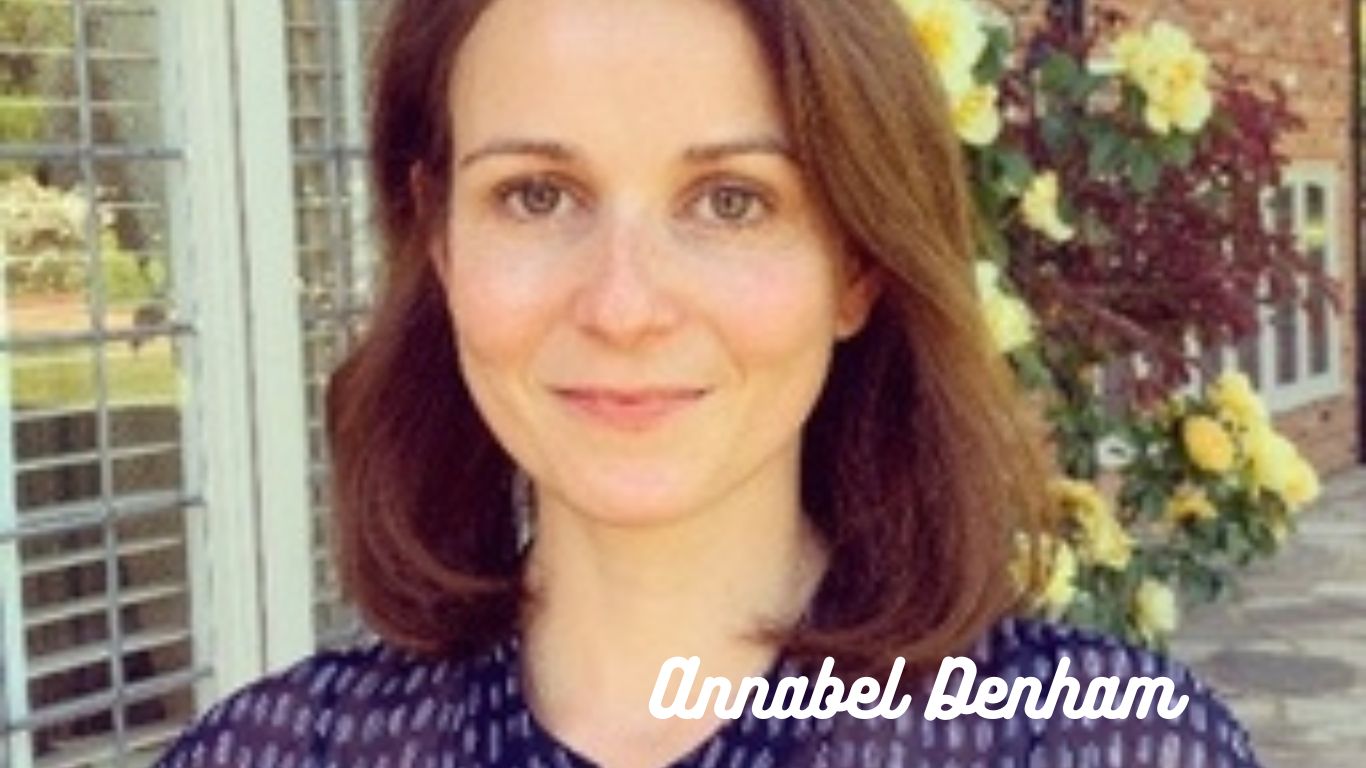
Annabel Denham is a well-known British journalist and political commentator. Her work combines politics at the Westminster level, free-market economics, public policy, and media debate. People usually come across her through The Telegraph, where she writes political commentary and opinion pieces, or through TV and radio appearances where she talks about the day’s political news. She is known to the public not because she is a celebrity or because of a public show, but because she consistently writes, edits, and debates about the direction of Britain.She is now a different kind of public figure. Even though Denham isn’t a politician, her work has a place in the political conversation. She’s not a typical news reporter in the strictest sense, but she does help people understand political parties, leaders, institutions, and policy choices. The best way to tell her story is through the jobs she’s had, such as in Parliament, business journalism, entrepreneurship policy, free-market think tanks, and writing comments for national newspapers.
The public record about Denham’s work is pretty good, but not so much about his personal life. This is important because many people who search for her name also look for information about her age, family, husband, income, and net worth, but not all of that information has been confirmed. A fair profile shouldn’t say things that make people guess. There is no doubt that Annabel Denham has become a well-known right-of-center voice in British politics. Her career has been shaped by her views on business, government power, public spending, and political accountability.
Early life and family history
Annabel Denham has kept a lot of her early life from the world. Public sites that you can trust don’t give away your exact date of birth, hometown, parents’ names, or a lot of information about your family. That kind of privacy is common for British journalists, especially those whose job is to report on news, not to be famous. It does mean that anyone writing about her life should start with what is known and not use internet guesswork to fill in the blanks.
There is no doubt that Denham’s public image has been shaped mostly by his schooling, work, and public statements. She hasn’t marketed herself as a lifestyle star or a family-oriented public figure. Most of the time, she talks and writes about politics, economics, policy, and public debate. The fact that she is focused on her work has helped people pay more attention to her arguments than to her personal life.
This lack of proven private information can be frustrating for people who want a full biography of the person. But it also says something about how Denham has decided to be seen in public. People who follow politics can know her, but she is careful not to let her personal life become the main topic of conversation. That boundary makes sense and is useful for someone who writes about institutions and national decisions.
Education and Intellectual Development
Isabel Denham’s academic background is commonly associated with the University of Manchester and SOAS University of London. Publicly available professional profiles indicate that she studied French and History at Manchester before pursuing postgraduate studies in International Studies at SOAS. This combination of subjects provided a solid foundation for a career centred on journalism, political commentary, and public affairs.
Studying history encourages critical thinking and helps develop an understanding of how political institutions, societies, and ideas evolve over time. Rather than viewing events in isolation, historians are trained to consider the broader context and long-term impact of decisions. Her studies in French and International Studies further expanded that perspective by introducing comparative politics, European affairs, diplomacy, and cross-cultural understanding.
These academic influences can be seen in the analytical style of her later work. Even when writing about British politics, her commentary often considers wider political trends and international perspectives rather than focusing solely on day-to-day events.
Rather than pursuing a career in academia, Denham applied her education in the fields of policy, communications, and journalism. Her academic training equipped her with research, analytical, and communication skills that translated naturally into public debate, editorial work, and political analysis, helping shape the professional voice for which she later became recognised.
Early Career in Westminster
Emily Carver Denham began her professional journey in Westminster, working as a parliamentary researcher for Lord Peter Lilley, a former Conservative Cabinet minister who served under Prime Minister John Major before later joining the House of Lords. Although parliamentary research often happens behind the scenes, it provides an invaluable understanding of how British politics functions in practice.
The role involves preparing policy briefings, researching legislation, drafting speeches, and supporting parliamentary work. It also offers firsthand insight into how political strategies are developed, how legislation moves through Parliament, and how decisions are shaped long before they reach the public. For someone who would later build a career in political commentary, this experience provided a practical understanding of government rather than simply a theoretical one.
Working inside Westminster also exposed Denham to the realities of party politics, including negotiation, messaging, internal debate, and the contrast between public statements and private decision-making. These experiences would later influence her analytical approach to politics and public policy.
Transition into Business Journalism
Following her time in Parliament, Denham moved into journalism, including a role at City A.M., the London-based newspaper specialising in business, finance, markets, and economic policy. The move marked an important shift from political research to public-facing journalism, allowing her to explore the relationship between government policy and the wider economy.
Reporting on business required a different perspective from traditional political journalism. Rather than focusing solely on parliamentary developments, business reporting examines how government decisions affect companies, entrepreneurs, investors, and workers. Subjects such as taxation, regulation, investment, and economic growth became central to her work.
Writing for City A.M.’s audience also meant communicating complex economic issues in a clear and accessible way. The publication primarily serves professionals interested in financial markets, business trends, and public policy, encouraging a practical approach to analysing economic decisions. This background continues to be reflected in Denham’s later commentary, where discussions of politics are frequently linked to their economic consequences.
Work with The Entrepreneurs Network
Before joining national newspaper journalism full-time, Denham held a senior communications role at The Entrepreneurs Network, a UK think tank focused on entrepreneurship, innovation, and enterprise policy. During this period, she also contributed to the Female Founders Forum, an initiative supporting women who build and grow businesses.
Her work extended beyond communications into policy engagement, events, research, and advocacy surrounding entrepreneurship. The organisation examined issues affecting business founders, including access to funding, scaling companies, regulatory barriers, business networks, and economic growth.
Through the Female Founders Forum, Denham worked on topics relating to women in business, particularly the challenges female entrepreneurs face when raising investment or expanding their companies. Her approach generally emphasised practical reforms, economic opportunity, and encouraging entrepreneurship rather than focusing solely on broader political debates surrounding gender equality.
This stage of her career broadened her understanding of enterprise policy and the practical realities faced by business owners. It also provided experience in communicating complex policy ideas to entrepreneurs, policymakers, and the wider public.
Joining the Institute of Economic Affairs
In 2020, Denham became Director of Communications at the Institute of Economic Affairs (IEA), one of the UK’s best-known free-market think tanks. The organisation has long advocated for policies such as lower taxation, deregulation, limited government intervention, and market-based economic reforms.
Her appointment came during a period of significant political and economic uncertainty as the COVID-19 pandemic reshaped public policy across the UK. Questions surrounding lockdowns, government spending, business support schemes, public borrowing, and the balance between state intervention and economic freedom became central topics of national debate.
Leading communications at the IEA placed Denham at the centre of discussions surrounding these issues, strengthening her experience in public policy, media engagement, and political communication while reinforcing her focus on economic policy and free-market ideas.
A Defining Role at the IEA
The timing of Denham’s appointment made the role particularly significant. As Communications Director at the Institute of Economic Affairs, her responsibilities extended far beyond issuing press releases. She was responsible for shaping how the organisation’s research reached the public, developing persuasive messaging, responding quickly to breaking political stories, and positioning experts across national media. It was a fast-paced role that demanded sound judgement, strategic thinking, and a strong understanding of how policy debates resonate with journalists and audiences. Her confident broadcast style today likely reflects the experience she gained in that environment.
The position also reinforced Denham’s association with free-market ideas. Supporters see her as someone who brings intellectual consistency and a principled economic perspective to public debate. Critics, meanwhile, view her as part of a broader ideological movement that remains deeply sceptical of government intervention. Regardless of where people stand, the connection has become a defining part of her public identity. Much of Denham’s work centres on the wider debate over the role of the state and the direction Britain’s economy should take.
A National Platform at The Telegraph
Denham’s move to The Telegraph marked another important stage in her career. As one of Britain’s most influential newspapers, particularly among conservative and centre-right audiences, The Telegraph offers a powerful platform for political commentary. Its opinion pages are widely read by politicians, advisers, business leaders, activists, and politically engaged readers, making it an ideal fit for someone with Denham’s background.
During her time there, Denham has worked in senior comment and editorial positions while also writing as a political columnist. Although these roles differ in scope, together they highlight both her editorial influence behind the scenes and her public voice as a commentator. Her work has involved not only expressing her own views but also helping shape the wider editorial conversation.
Opinion pieces published in The Telegraph often influence political discussion within Westminster, particularly when they focus on issues such as taxation, immigration, welfare reform, leadership, or the future of the Conservative Party. Denham’s writing sits firmly within that landscape, offering readers not just a summary of events but a perspective on what those developments reveal about Britain’s political and economic direction.
Themes That Define Her Commentary
Denham regularly writes about British politics, economic policy, public spending, welfare, higher education, immigration, and the health of national institutions. Her perspective is consistently centre-right, with a strong emphasis on individual responsibility, limited government, and the importance of effective public policy. Rather than concentrating solely on electoral politics, she often examines whether political leaders are willing to address difficult long-term challenges.
Her columns frequently explore subjects such as incentives, dependency, institutional decline, and the disconnect between political promises and everyday reality. She has written extensively about the future of the Conservative Party, Labour’s record in government, the rise of Reform UK, welfare spending, universities, and debates surrounding British identity. These topics place her at the heart of many of the political conversations that have shaped Britain in the years following Brexit, the Covid-19 pandemic, and the cost-of-living crisis.
A recurring theme throughout her work is concern over the effectiveness of public institutions and declining trust in government. Denham often argues that Britain has become too willing to tolerate underperformance, avoid difficult reforms, and accept institutional decline. Whether readers share that view or not, it helps explain why her commentary continues to generate attention beyond The Telegraph‘s core readership.
Broadcast Commentary
Alongside her newspaper work, Denham has built a growing presence on television and radio. She regularly appears on political discussion programmes, newspaper review panels, and current affairs broadcasts where commentators analyse the day’s biggest stories. These appearances demand a different approach from print journalism, requiring concise arguments, quick thinking, and the ability to communicate complex issues clearly within limited time.
Her broadcasting style closely mirrors her writing. She is direct, confident, and comfortable defending clear political positions. Rather than presenting herself as a neutral news reporter, Denham appears as a political commentator whose role is to interpret events, explain their significance, and contribute to wider public debate. That distinction is central to her public profile and reflects the role she has carved out within Britain’s political media landscape.
Television Appearances and Public Profile
Alongside her newspaper work, Annabel Denham has expanded her public profile through regular television appearances. Many viewers first recognise her from newspaper review programmes and political discussion panels before discovering her written commentary.
On screen, she is known for expressing a centre-right perspective that generally favours free-market economics, limited government intervention, and a critical view of expanding state institutions. Her willingness to debate contentious political issues has earned both praise and criticism, reflecting the often polarised nature of political commentary in Britain.
Personal Life
Annabel Denham keeps her personal life out of the public eye. There is no verified information confirming whether she is married or has children, and she has not publicly discussed these aspects of her life.
Most professional biographies focus on her journalism, policy work, media appearances, and career achievements rather than her private relationships. As a result, any claims regarding her family life should be treated cautiously unless supported by credible sources.
This distinction is important. Public figures involved in journalism and political commentary are accountable for their professional work and public opinions, but that does not mean every aspect of their personal lives belongs in the public domain. In Denham’s case, respecting that boundary provides a more accurate and balanced profile.
Net Worth and Career Earnings
There are no reliable public records confirming Annabel Denham’s net worth. While various websites publish estimated figures, these estimates are generally unsupported by verifiable financial information and should not be considered factual.
Her professional income is likely derived from several sources, including journalism, editorial positions, communications roles, political commentary, and television appearances. Like many established journalists, her earnings depend on the positions she has held throughout her career rather than on publicly disclosed financial statements.
Without official disclosures or credible reporting, assigning a specific net worth would be speculative. The most accurate conclusion is that her financial details remain private.
Public Debate and Criticism
As a political commentator, Annabel Denham regularly contributes to debates on subjects such as public spending, welfare policy, economic reform, higher education, and immigration. Naturally, these topics generate differing opinions.
Supporters appreciate her advocacy for free-market principles and her criticism of government expansion, while opponents argue that some of her positions place too little emphasis on social inequality or the role of public services.
Such disagreement is common in opinion journalism and reflects broader political divisions rather than personal controversy. There is no widely reported scandal associated with Denham. Instead, discussion surrounding her work centres on the ideas she presents and the arguments she makes.
Where Is Annabel Denham Today?
Annabel Denham continues to be recognised as a political commentator and journalist whose work focuses on British politics, economic policy, public institutions, and cultural issues. Through her writing and broadcast appearances, she contributes to ongoing conversations about the country’s political and economic direction.
Her career has followed a distinctive path through Parliament, business journalism, policy organisations, communications, and national media. This combination of experiences has shaped a commentary style that is strongly informed by public policy and economic debate.
Rather than being defined by a single moment or headline, Denham has built her reputation through consistent engagement with issues affecting modern Britain.
Frequently Asked Questions
Who is Annabel Denham?
Annabel Denham is a British journalist, editor, and political commentator. She is best known for her opinion writing and commentary on British politics, economic policy, public spending, higher education, and government reform.
Before joining national media, she worked in Parliament, business journalism, entrepreneurship policy, and think-tank communications, giving her commentary a strong policy-focused perspective.
What is Annabel Denham known for?
Denham is known for her centre-right political commentary and analysis of public policy. Her writing frequently explores topics including taxation, welfare, economic growth, business, universities, and the role of government.
She is also recognised for television appearances on political discussion programmes and newspaper review panels, which have expanded her public profile beyond print journalism.
What did Annabel Denham do before joining The Telegraph?
Prior to joining The Telegraph, Denham worked as a parliamentary researcher before moving into business journalism with City A.M. She later held communications and policy roles with organisations including The Entrepreneurs Network and the Institute of Economic Affairs.
These positions provided experience in politics, economics, and public policy that continues to influence her journalism today.
Is Annabel Denham married?
Annabel Denham has not publicly shared verified information about her marital status or family life. There are no reliable public sources confirming whether she is married or has children.
Her public profile remains focused on her professional work rather than her private life.
How old is Annabel Denham?
Annabel Denham’s exact date of birth has not been publicly confirmed by reliable sources. Although some websites provide estimates, these should not be treated as verified information.
Until an official source confirms her age, it is best to avoid presenting speculative figures as fact.
What is Annabel Denham’s net worth?
There is no verified information regarding Annabel Denham’s net worth. Estimates published online are generally unsupported and should be approached with caution.
Her career includes journalism, editing, communications, political commentary, and media appearances, but her personal financial information has not been publicly disclosed.
What are Annabel Denham’s political views?
Annabel Denham is widely associated with centre-right and free-market political thought. Throughout her career, she has written extensively about economic reform, government spending, regulation, entrepreneurship, and public institutions.
Although her opinions are clearly expressed through her published work, she serves as a journalist and commentator rather than an elected political representative.
Conclusion
Annabel Denham has built a career at the intersection of journalism, politics, and public policy. Her experience spans parliamentary research, business reporting, think-tank communications, and national opinion writing, giving her a distinctive perspective on Britain’s political landscape.
Rather than seeking public attention through her personal life, she has established her reputation through consistent analysis of issues such as economic growth, public spending, welfare reform, higher education, and the role of government. These themes continue to shape both her writing and her television appearances.
A balanced profile of Denham focuses on what is publicly documented while respecting the privacy she has maintained outside her professional career. Whether readers agree with her views or not, she remains a recognised voice in Britain’s political conversation, contributing to debates that continue to influence public discourse.