
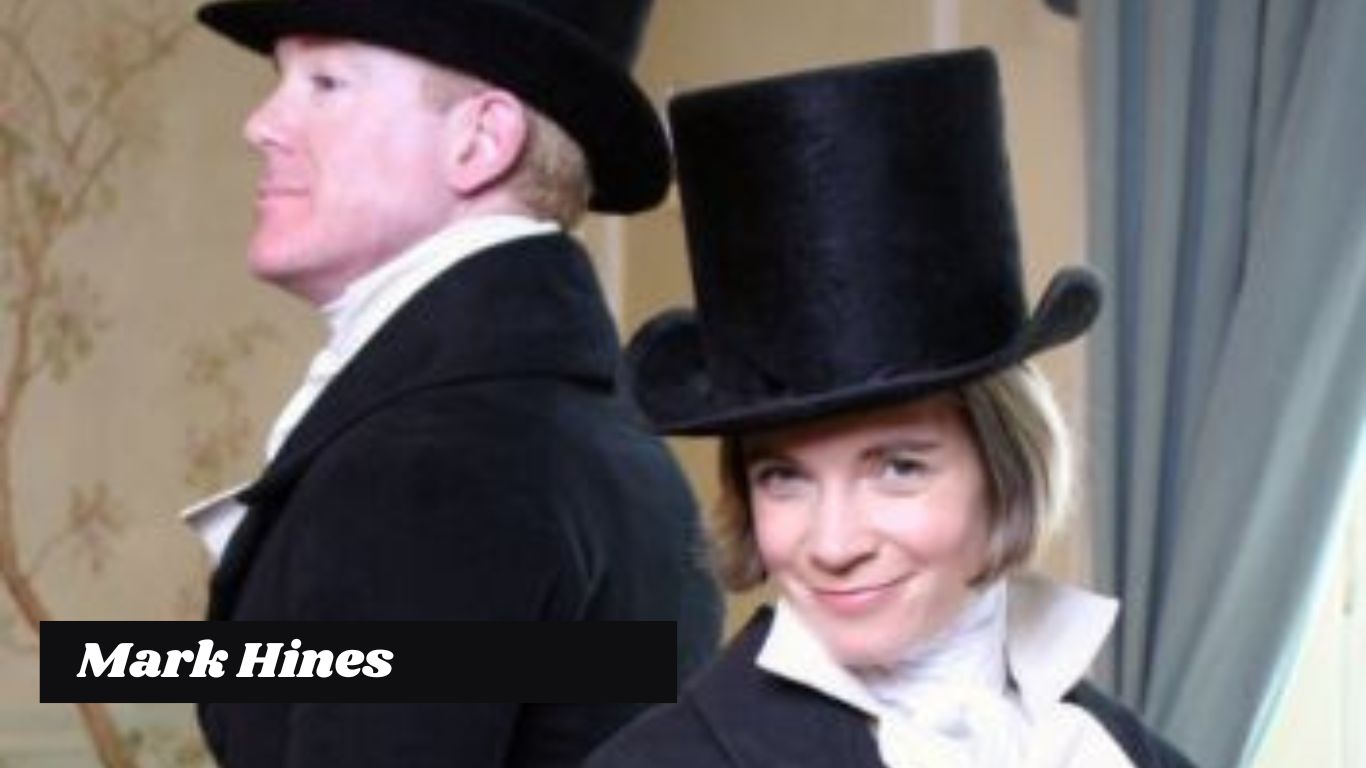
The name Mark Hines subtly but firmly demands attention when discussing British heritage architecture. Hines, an architect who views history as a collaborator in design rather than a limitation, is more well-known in professional circles than in public life. He is a symbol of a link between the past and the present.
In addition to his architectural accomplishments, Hines is well-known for his union with renowned British historian and television host Lucy Worsley. However, Mark Hines has established his reputation behind the scaffolding of some of the most important structures in the UK, letting his work to speak for him, in contrast to his wife’s public-facing job.
This article provides a thorough look at a man whose architectural legacy subtly influences how Britain conserves and reimagines its legacy by examining his origins, career, design philosophy, noteworthy works, and personal life.
Early Life and Schooling
In June 1967, Mark Andrew Hines was born in the United Kingdom. His early family history and educational background are not well known, but his career path indicates a lifelong love of historic structures and adaptive reuse.
Hines started his career during a critical period in British design after studying architecture in the UK (perhaps at one of the nation’s top architectural schools, like the Bartlett or Cambridge, given his later professional links). A rising gap between modernist new construction and a revival of conservation architecture emerged in the 1980s and 1990s, a discussion that Hines would later have a significant impact on.
His acceptance of the Lethaby Scholarship from the Society for the Protection of Ancient Buildings (SPAB), which William Morris formed to encourage ancient building repair as opposed to replacement, was a significant turning point in his development. Hines was introduced to the sustainable, craft-based concept that would characterise his entire career through the fellowship.
He would subsequently meet Lucy Worsley during this SPAB experience, who worked there as part of her early conservation training. This encounter marked the start of both a professional kinship and, eventually, a romantic relationship.
MJP Architects’ professional beginnings
One of the most reputable architectural firms in the UK, MacCormac Jamieson Prichard (MJP Architects), was Hines’ first and mid-career employer. MJP, which is well-known for projects that combine sensitive urban and historical awareness with modern design, became the ideal workplace for Hines’s developing philosophy.
He contributed significantly to a number of well-known cultural and civic initiatives while serving as Director of MJP, but the BBC Broadcasting House Redevelopment in London would eventually come to define his legacy more than any other.
The Project for the BBC Broadcasting House
A Reimagined National Icon
One of the most iconic structures in Britain is Broadcasting House, the long-standing home of the BBC and an Art Deco masterpiece located in Portland Place, London. It was a technological and architectural wonder when it first opened in 1932 and served as Britain’s global voice.
However, the structure had deteriorated by the late 20th century. The BBC required a state-of-the-art facility that could support modern news, broadcasting, and digital production. However, complete demolition or callous redevelopment was not an option due to the building’s Grade II* listed status.
Mark Hines comes in.
In his role as Project Director at MJP Architects, Hines took on one of the most difficult conservation tasks of his time: expanding, modernising, and restoring the BBC’s historic building without sacrificing its original character.
The outcome was a ten-year metamorphosis that skilfully combined innovation and tradition. A large glazed atrium served as a literal and metaphorical link between the repaired 1930s building and the new addition, eventually dubbed the John Peel addition.
Practical Applications of Philosophy
The three elements that characterise Hines’s work were embodied in his approach to Broadcasting House:
Respect for Heritage: “What makes this building special?” was the first consideration in every decision. Hines aimed to preserve the façade, important interior spaces, and characteristic Art Deco detailing rather than eliminate its peculiarities.
Integration of Contemporary Technology: The BBC need a state-of-the-art broadcasting environment. Without noticeably altering the building’s original shape, Hines and his colleagues subtly incorporated contemporary systems—such as lighting, ventilation, and studios—into the building.
Sustainability Through Reuse: Hines recognised that keeping a building’s structure is intrinsically more sustainable than reconstructing it even before carbon measurements gained popularity. He would later openly support the idea of embodied carbon preservation, which Broadcasting House became an early example of.
Publication: Broadcasting House’s Story
Hines wrote the highly illustrated book The Story of Broadcasting House: Home of the BBC (Merrell Publishers) in 2008, which details the building’s history and renovation. The book, which combines technical knowledge with cultural storytelling, is still a vital resource for conservation architecture students.
By illustrating how built heritage may change without losing authenticity, Hines’ work showcased both his design prowess and his function as an architectural historian.
Establishing Mark Hines Architects (2006–2024)
In 2006, Hines left MJP to start his own firm, Mark Hines Architects. The company was situated in the Clerkenwell neighbourhood of London, which is a center for designers, architects, and artisans.
The studio focused on “transformations of existing buildings” and “contemporary new homes inspired by the past.” These slogans demonstrated a sincere dedication to sustainability, craft, and continuity rather than being marketing platitudes.
Fundamental Ideas
Hines’s architectural philosophy is characterised by a number of themes throughout his independent work:
- Continuity, Not Contrast: Hines favoured subtlety above forcing contemporary interventions that demand attention. His additions frequently read like organic developments of a building’s narrative.
- Material Honesty: Hines gave preference to materials that revealed their function and aged gracefully, whether they were made of brick, stone, or glass.
- Carbon Awareness: Hines promoted reducing embodied carbon through reuse long before “net zero” became industry jargon. “The greenest building is the one already built,” he frequently asserted.
- Human-Centric Design: Light, space, proportion, and tactility were just as important as technology or style in his work, which focused on the comfort and well-being of occupants.
Selected Initiatives
Even though the majority of his projects did not seek media attention, they constantly adhered to his philosophy of making delicate changes to modernise historic structures. These included both institutional renovations and individual residences.
Each showed an architect who was equally adept at modern design and history preservation, a unique combination that made his work respected by both clients and colleagues.
Firm Dissolution
In 2024, after operating for almost twenty years, Mark Hines Architects Ltd. was formally disbanded. This administrative closure, which is typical of small UK offices, does not mean that architects are retiring or leaving the field. In fact, architects with Hines’s profile frequently carry on with independent consulting or teaching, which enables more concentrated, project-based work.
Promoting Sustainable Heritage
The House Debate in Richmond
Hines has emerged as a reputable voice in conversations on government construction projects and sustainability in recent years. His participation in the controversy surrounding Richmond House, a Grade II* listed structure in Whitehall, was one such instance.
Hines was one of the conservation specialists advocating for a different strategy when plans surfaced to demolish a large portion of the building to create a temporary House of Commons during parliamentary reconstruction. He maintained that intelligent reuse and refurbishing may satisfy contemporary requirements at a far lower cost and with less of an impact on the environment.
His position was based more on reason than emotion: why demolish a useful, historically significant structure when careful modification could accomplish the same objective more sustainably? His longstanding belief that “heritage is the greenest form of construction” was reflected in this argument.
Leadership in Thought
Hines has supported retrofit over rebuild at talks organised by professional associations like the Twentieth Century Society and SPAB. His observations frequently center on data-driven, pragmatic thinking that strikes a balance between climate responsibility and architectural integrity.
His voice is powerful because it is based on experience rather than philosophy. He gained direct knowledge of how contemporary performance expectations can coexist with historical limitations through the Broadcasting House project.
Personal Life: Lucy Worsley’s marriage
Although Hines is highly regarded in his industry, his marriage to Lucy Worsley, one of the most well-known historians and television hosts in Britain, has made him well-known to the general public.
How They Met
Worsley first got to know Hines in the late 1990s while she was employed by the Society for the Protection of Ancient Buildings (SPAB), the same organization that had previously educated Hines. They probably had common ground from the beginning because they both valued historic architecture and conservation.
Marriage and Confidentiality
Despite being married in 2011, the couple has purposefully kept their relationship a secret. In interviews, Worsley has occasionally brought up her spouse, characterising him as encouraging but media-averse—”a man who doesn’t want to be on television,” she once joked.
They lead a low-key, tranquil life in south London. In a world where personal lives are frequently a part of the professional brand, Worsley has highlighted that she and her husband favour intellectual connection and seclusion over public visibility.
Common Ethos
Beyond marriage, the couple has a similar outlook on a philosophical level. While Hines’s architecture preserves and reinterprets history via space, Worsley’s historical narratives frequently examine how the past influences the present.
It seems sense that while one uses words to explain Britain’s stories, the other uses architecture to do so.
Legacy and Its Influence on Contemporary Architecture
“Re-use Architecture” advocate
“Re-use architecture” is the best way to sum up Mark Hines’s impact. Hines viewed old structures as assets to be modified rather than barriers to be removed long before it became a catchphrase.
In 2025, as the construction sector faces the twin challenges of urban density and climate change, this idea is more relevant than ever. Demolition-heavy development releases enormous amounts of embodied carbon, a waste of energy, materials, and cultural value, in addition to erasing heritage.
A model of balance is provided by Hines’s work: design that respects the past while satisfying present and future demands.
Teacher and Writer
Despite not being a full-time professor, Hines has a teaching attitude in his work and public speeches. Students and professionals can still benefit greatly from his book on Broadcasting House. Additionally, he has given talks at architectural societies on subjects like “The Craft of Retrofitting” and “Designing for Reuse.”
By being transparent about his techniques, he reaffirms a crucial point: excellent architecture demands tolerance, compassion, and respect for people, materials, and place.
Impact on Heritage Policy
Hines has influenced a more general change in policy thinking through his public advocacy. Retrofit-first strategies are becoming more and more important in British planning and heritage frameworks today; these policies are similar to those that architects like Hines promoted decades ago.
In-depth Analysis of Architectural Style and Philosophy
1. Context Above Ego
The idea that architecture must constantly make a visual statement is rejected by Hines. According to him, a novel intervention’s degree of success is determined by how well it blends in with its environment. According to him, architecture should serve its setting and its consumers rather than the architect’s signature.
2. The Material of Time
Hines uses time as a design element in his conservation work. Wear, patina, and imperfections are real indicators of a building’s lifespan rather than defects. In order to make both materials readable, he frequently juxtaposes modern and old elements in his creations.
3. Craft and Teamwork
Hines keeps tight ties with artisans, including metalworkers and stonemasons. He appreciates old craft because it gives architecture endurance and precision—qualities that contemporary fast-build techniques frequently overlook—rather than because of nostalgia.
4. Modesty as Power
Restraint is arguably the most distinctive feature of his art. His structures age well, but they are rarely featured on glossy magazine covers. Hines’s subdued architecture feels incredibly daring in a time when spectacle is everything.
Public View and Acknowledgement
Hines’s acclaim comes from peers and institutions rather than headlines, in contrast to celebrity architects whose names dominate award circuits. He is seen by the British architectural community as an example of integrity—an architect who doesn’t sacrifice values in order to gain attention.
Younger architects looking for significant alternatives to solely commercial design are still motivated by his book, lectures, and projects. His work is often cited by conservation officers, heritage experts, and proponents of sustainable design as an example of how cultural and environmental sustainability may coexist.
Despite his quiet demeanour, his influence can be seen in the way British architecture now views renovation as a discipline unto itself rather than as a side project.
The Architect’s Man
Those who have collaborated with Hines characterise him as a meticulous, calm, and careful designer who listens more than he talks. Deliberate, thoughtful, and fact-based, he is said to approach meetings and design evaluations with the same patience he applies to his drawings.
His hobbies outside of work naturally correspond with his line of employment: the visual arts, craftsmanship, and history. Colleagues remember that despite his extensive knowledge of architectural history, he speaks about it with humility rather than authority.
A Common Heritage: Hines and Worsley
Lucy Worsley and Mark Hines represent two sides of the same cultural coin in many respects. He preserves Britain’s history through its structures, and she does so through its stories.
Their same commitment to public education and understanding is another area where their occupations overlap. While Worsley uses literature and television to educate millions about history, Hines brings the same respect for the past into everyday areas.
Together, they stand for a collaboration based on a common goal—the preservation of British heritage—rather than celebrity.
Important Lessons
Renowned for overseeing the renovation and renovation of the BBC Broadcasting House, Mark Hines is a prominent figure in British conservation architecture.
His architectural philosophy is in line with contemporary environmental goals, emphasising sustainability, reuse, and respect for context.
He established his own company in 2006 and managed it until 2024, creating projects that combined innovation and tradition.
Although they both lead private lives away from the spotlight, he is married to Lucy Worsley, a well-known historian and broadcaster.
His support of retrofit-first solutions has influenced modern architectural discourse and policy about historic preservation and carbon reduction.
In conclusion
In British architecture, Mark Hines is a quiet but influential figure who uses his structures rather than his words to convey his ideas. He has demonstrated through initiatives like the BBC Broadcasting House that tradition and advancement are allies in building meaningful, sustainable ecosystems rather than antagonists.
His work embodies a set of timeless principles: reverence for the past, dedication to craft, and faith in the ability of architecture to foster a sense of place. In a society that frequently confuses innovation with novelty, Hines reminds us that sometimes taking care of what we already have is the most progressive thing we can do.