Indoor comfort is about far more than temperature alone. A home can technically feel “cool” while still feeling sticky, damp, or uncomfortable. It can also feel warm during winter yet leave your skin dry, your throat irritated, and your furniture cracking from lack of moisture. That is because humidity plays a major role in how indoor spaces feel, function, and even age over time.
Most homeowners expect their HVAC systems to handle humidity automatically, but standard heating and cooling systems only manage moisture indirectly. In many climates, especially during humid summers or dry winters, additional humidity-control solutions are essential to maintain comfort, protect indoor air quality, and preserve building materials.
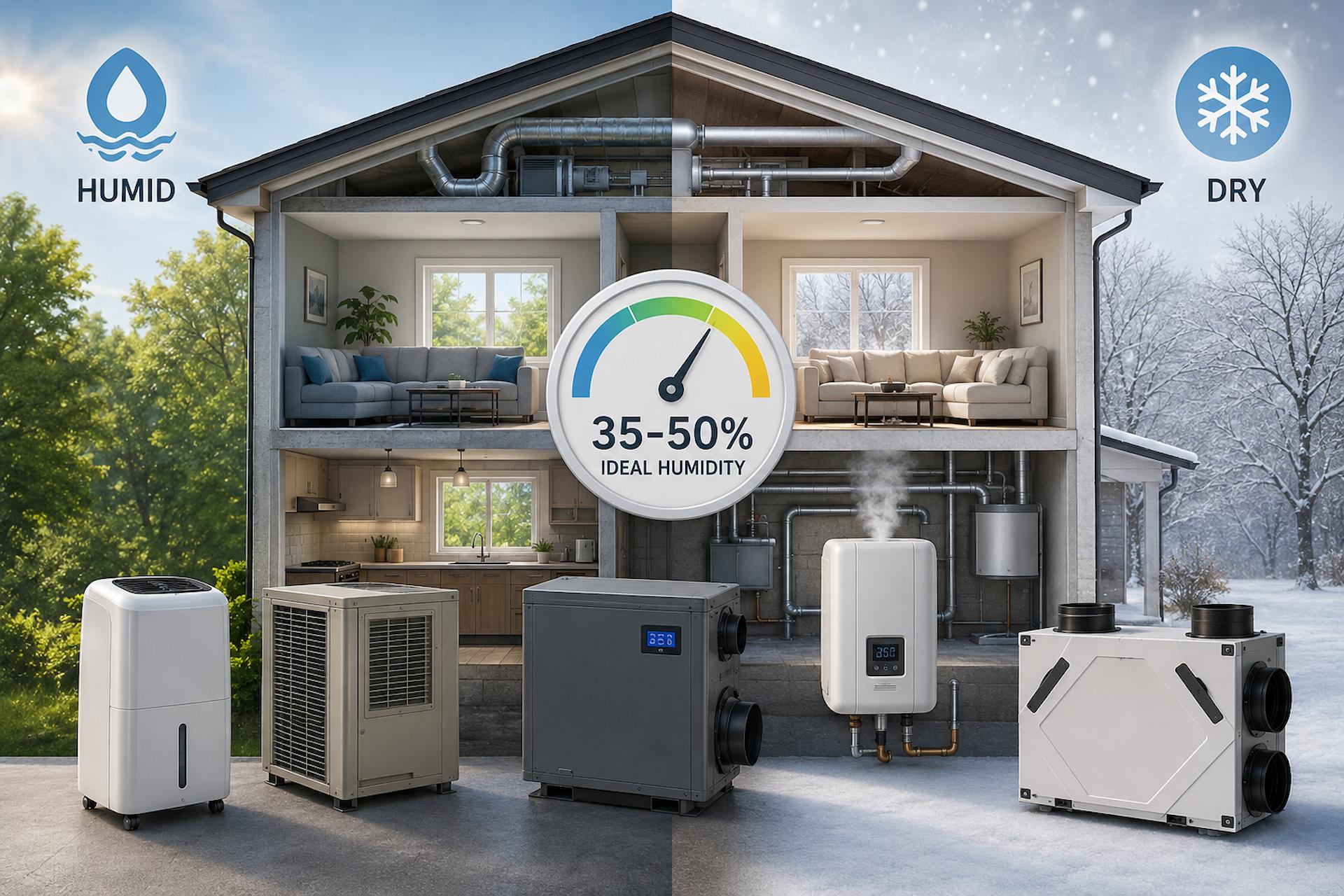
Here are the most effective humidity-control solutions to achieve the ideal indoor comfort range of 35–50 percent relative humidity year-round.
1. Understand Why Indoor Humidity Matters More Than Most People Realize
Humidity directly affects comfort, health, and home efficiency. High humidity makes indoor air feel warmer than it actually is because moisture slows the body’s natural cooling process. Low humidity has the opposite effect, creating dry air that irritates skin, sinuses, and respiratory systems.
Balanced humidity helps:
- Improve indoor comfort
- Reduce mould and mildew growth
- Protect wood flooring and furniture
- Lower dust mite activity
- Improve sleep quality
- Reduce static electricity
- Support HVAC efficiency
Most experts recommend maintaining indoor relative humidity between 35 and 50 percent. Once humidity consistently exceeds 60 percent, problems such as condensation, musty smells, and microbial growth become more common. Extremely dry conditions below 30 percent can damage wood surfaces and worsen respiratory irritation.
2. Use a Hygrometer to Measure Humidity Accurately
Before choosing any humidity solution, homeowners need reliable indoor readings. A hygrometer is a small device that measures indoor relative humidity levels. Many smart thermostats and indoor air quality monitors now include built-in humidity tracking.
The most accurate approach is to monitor several areas of the home because humidity can vary significantly between rooms, basements, bathrooms, and upper floors.
Signs of excessive humidity include:
- Sticky or clammy indoor air
- Condensation on windows
- Musty odours
- Visible mould growth
- Persistent dampness
Signs of low humidity include:
- Dry skin and throat
- Cracked wood furniture
- Static shocks
- Frequent nose irritation
- Dry indoor plants
Without accurate measurements, homeowners often treat the wrong problem or overcorrect humidity levels.
3. Recognize the Limits of Standard Air Conditioning Systems
Central air conditioning naturally removes some moisture while cooling the air, but that process has limitations. Air conditioners are primarily designed for temperature control, not dedicated humidity management.
During extremely humid weather, AC systems may struggle to remove enough moisture. Mild outdoor temperatures create another common issue because the cooling system cycles off too quickly before sufficient dehumidification occurs.
Oversized HVAC systems often make humidity problems worse. They cool rooms rapidly but do not run long enough to extract moisture effectively from indoor air.
Common signs your AC system is not adequately controlling humidity include:
- Rooms still feel damp despite cooling
- Persistent indoor stickiness
- Uneven comfort between rooms
- Higher-than-expected humidity readings
- Musty odors during summer
This is where supplemental humidity control becomes valuable.
4. Portable Dehumidifiers Offer Quick Relief for Problem Areas
Portable dehumidifiers remain one of the most accessible solutions for reducing excess moisture in specific spaces.
They work especially well in:
- Basements
- Laundry rooms
- Garages
- Crawl spaces
- Bathrooms
- Small apartments
These units pull moisture from the air and collect it in a removable reservoir or direct drainage line. Modern models often include humidity sensors, programmable settings, and continuous drainage options.
However, portable units have limitations. They require regular maintenance, emptying, and cleaning. They also only control humidity in the immediate area, not throughout the entire home.
For isolated moisture problems, though, they can provide an affordable and highly effective solution without requiring HVAC modifications.
5. Whole-Home Dehumidifiers Deliver Better Summer Comfort
In humid climates, dedicated whole-home dehumidifiers provide significantly better moisture control than standard air conditioning alone.
These systems integrate directly with HVAC ductwork and remove excess moisture independently from the cooling cycle. That means they continue to control humidity even during mild weather, when the air conditioner runs less frequently.
Benefits include:
- Consistent humidity control throughout the house
- Reduced mould and mildew risk
- Improved indoor comfort
- Lower indoor allergens
- Better protection for flooring and furniture
- Reduced strain on the air conditioning system
Whole-home dehumidifiers are particularly valuable in regions with long humid seasons or homes with sealed building envelopes that trap indoor moisture.
Although installation costs are higher than portable units, the long-term comfort and efficiency improvements often justify the investment.
6. Humidifiers Solve Dry Winter Air Problems
Winter heating systems frequently dry indoor air to uncomfortable levels. Furnaces and heat pumps naturally reduce indoor moisture as outdoor temperatures drop.
Whole-home humidifiers restore balanced moisture levels during colder months. The three most common types include:
Bypass Humidifiers
These systems use warm furnace airflow to evaporate moisture into the duct system. They are affordable and widely used in residential homes.
Fan-Powered Humidifiers
These units include their own fan to deliver more moisture and improve efficiency.
Steam Humidifiers
Steam systems offer the most precise humidity control and work independently from furnace operation. They are ideal for larger homes or severe dryness issues.
Properly maintained humidifiers can improve respiratory comfort, reduce static electricity, and protect wood furniture, flooring, and musical instruments from cracking.
7. Energy Recovery Ventilators Help Balance Fresh Air and Moisture
Modern homes are more airtight than ever, which improves energy efficiency but can trap stale, humid air indoors.
Energy recovery ventilators (ERVs) improve indoor ventilation while helping regulate humidity levels. These systems exchange stale indoor air with fresh outdoor air while transferring heat and moisture between the incoming and outgoing airflow.
ERV systems are especially effective for:
- Tightly sealed homes
- Homes with persistent humidity imbalance
- Improving indoor air freshness
- Reducing stale odors
- Supporting healthier ventilation year-round
Unlike opening windows, ERVs improve ventilation without major energy loss. They work particularly well alongside modern HVAC systems and whole-home dehumidifiers.
8. Improve Bathroom and Kitchen Ventilation
Some humidity problems originate from everyday activities rather than HVAC performance.
Cooking, showering, laundry, and dishwashing all release large amounts of indoor moisture. Without proper ventilation, humidity accumulates quickly.
Simple upgrades that help include:
- High-efficiency bathroom exhaust fans
- Timed ventilation controls
- Range hoods vented outdoors
- Laundry room ventilation improvements
- Continuous low-speed ventilation systems
Bathroom fans should continue running for at least 15–20 minutes after showers to fully remove excess moisture.
Many indoor humidity issues improve dramatically once the sources are controlled and ventilation is consistently addressed.
9. Seal Air Leaks and Insulate Properly
Humidity problems are often connected to building envelope issues. Poor insulation and air leakage allow warm, moist air to come into contact with cooler surfaces, leading to condensation and moisture buildup.
Common trouble areas include:
- Attics
- Crawl spaces
- Basement walls
- Window frames
- Exterior wall penetrations
- Poorly sealed ductwork
Improving insulation and sealing leaks helps stabilize indoor humidity and improve overall HVAC efficiency.
This approach also reduces condensation problems that can lead to mould growth behind walls or around windows.
10. Build a Year-Round Humidity Management Strategy
The most effective humidity control plans combine multiple solutions rather than relying on a single device.
A balanced strategy often includes:
- Monitoring humidity regularly
- Seasonal HVAC maintenance
- Proper ventilation
- Whole-home humidity control equipment
- Source moisture reduction
- Smart thermostat integration
Homes in humid climates may prioritize dehumidification in summer, while homes in colder regions often require humidification in winter. The ideal setup depends on climate, home design, insulation quality, occupancy, and existing HVAC performance.
Humidity management works best when approached as part of a complete indoor comfort system rather than a standalone fix.
FAQs
Are whole-home dehumidifiers worth the investment?
Whole-home dehumidifiers can significantly improve comfort, reduce the risk of mould, and lower indoor moisture levels throughout the house. They are especially valuable in humid regions or tightly sealed modern homes.
What causes dry indoor air during winter?
Heating systems naturally lower indoor moisture during colder weather. Low outdoor humidity, combined with continuous indoor heating, often creates dry conditions that irritate the skin, throat, and respiratory system.
How do ERVs improve indoor humidity control?
Energy recovery ventilators exchange stale indoor air with fresh outdoor air while helping retain energy and manage moisture levels. They improve ventilation without causing major heating or cooling losses.
How often should humidity levels be checked?
Indoor humidity should ideally be monitored year-round using a hygrometer or smart thermostat system. Seasonal weather changes, ventilation habits, and HVAC performance can all quickly affect indoor moisture levels.
Conclusion
Achieving true indoor comfort requires more than simply adjusting the thermostat. Humidity plays a major role in how a home feels, how efficiently HVAC systems perform, and how well indoor environments support health and long-term property protection.
From portable dehumidifiers and whole-home humidifiers to ERVs and advanced ventilation systems, modern humidity control solutions help homeowners maintain balanced indoor conditions throughout every season. Understanding how moisture affects comfort allows homeowners to create healthier, fresher, and more energy-efficient living spaces that standard HVAC systems alone cannot always deliver.